
By: Justin Esponilla
In a radically different context, we celebrate World Press Freedom Day, within a common experience that sets limit on autonomy and privacy. But in some countries including the Philippines, the borders are crushing one basic right: freedom of expression.
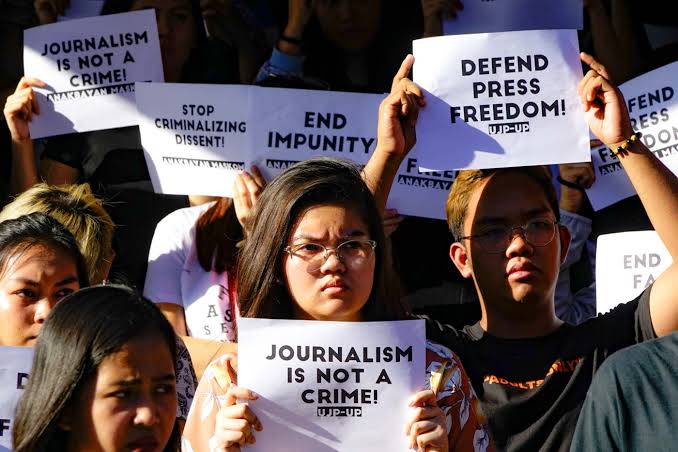
Proclaimed by the General Assembly of the United Nations in December 1993, World Press Freedom Day is primarily a time to commemorate the basic values of freedom of the press, evaluate its condition across the world, protect the media from assaults on its independence, and pay tribute to journalists who have lost their lives in the course of their duties.
“Media for Democracy: Journalism and Elections in Times of Disinformation,” as the theme of this year, I think it sounds as if it was written specifically for the context of the Philippines.
The Philippine press is undermined from inside by those who blur the line between propaganda and journalism. Journalists are no less human than other people, and some just give in to the temptations of power and money. Many portray themselves as seekers of truth but intentionally vend lies to baleful their competitors or mislead the audience.
The press finds itself having to work hard from the outside to combat the impact of misinformation, which is exacerbated by the capacity of technology to spread lies in real-time. Even a well-researched work is instantly labeled as fraudulent, also radical, even though it was reasonable and balanced. Where some officials are severely misguided in believing a positive press is a hostile press.
Yet, I still believe that criticism and opposition are the healthy building blocks of democracy. If both government officials and the media want just what’s best for the country, not themselves, they’d welcome pointed comments and opposing opinions to ensure they’re doing their job well.
Journalism was never a remunerative occupation, its rewards mean in many things, it includes understanding that journalists play a huge role in nation-building by reporting without exclusion, by praising when recognition is due without expectation of reward, and by declaring excesses as justified without fear of violence.
 Intuitus Est Herald